THE WILDER — LAND
Enter the field. Read the terrain. Move with intention.
Opening — Into the Giant Forest
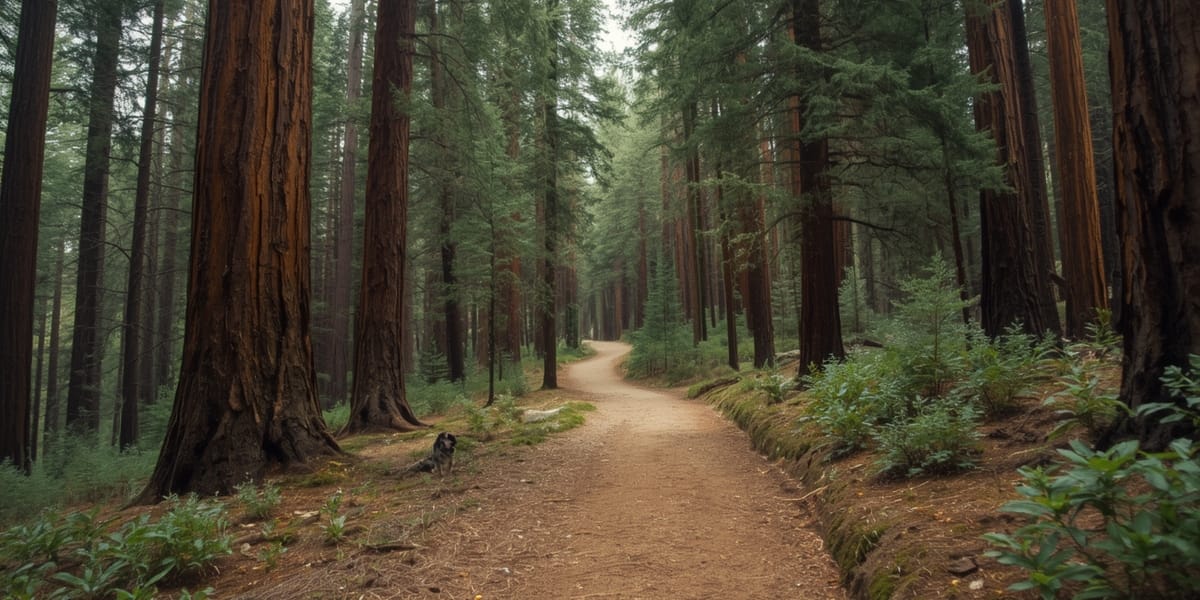
Morning light cuts through the canopy as the trail disappears between giant sequoias. Wind moves high above you. The ground is cool, textured, and quiet. Your companion is already reading the path ahead.
Your expedition begins before the first mile. Observe the terrain, the weather, your dog’s movement, and the gear that will carry you through it.
Loadout — Prepare Before You Move
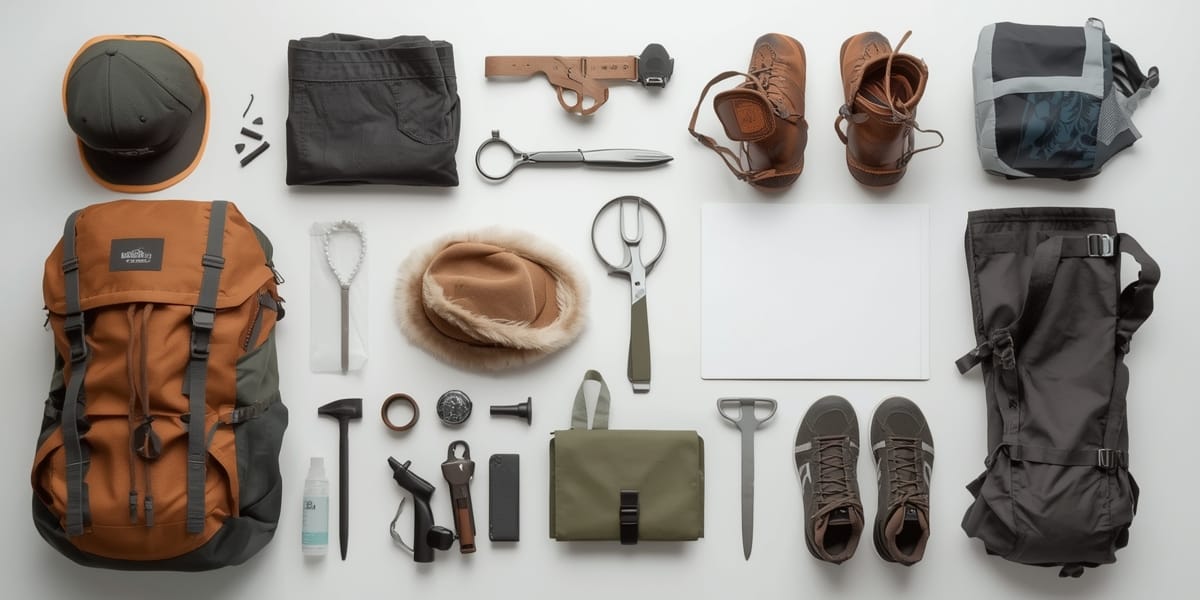
The loadout stays deliberately compact. Protection, cooling, navigation, recovery, and transport each solve a specific field problem before that problem becomes urgent.
- Protection — check paw fit, traction, surface temperature, and boot condition
- Cooling — carry water, a cooling layer, and a compact recovery surface
- Navigation — confirm GPS and health monitoring are charged and connected
- Transport — know how you will carry your dog if heat, injury, or fatigue changes the plan
Trail — Read What Changes
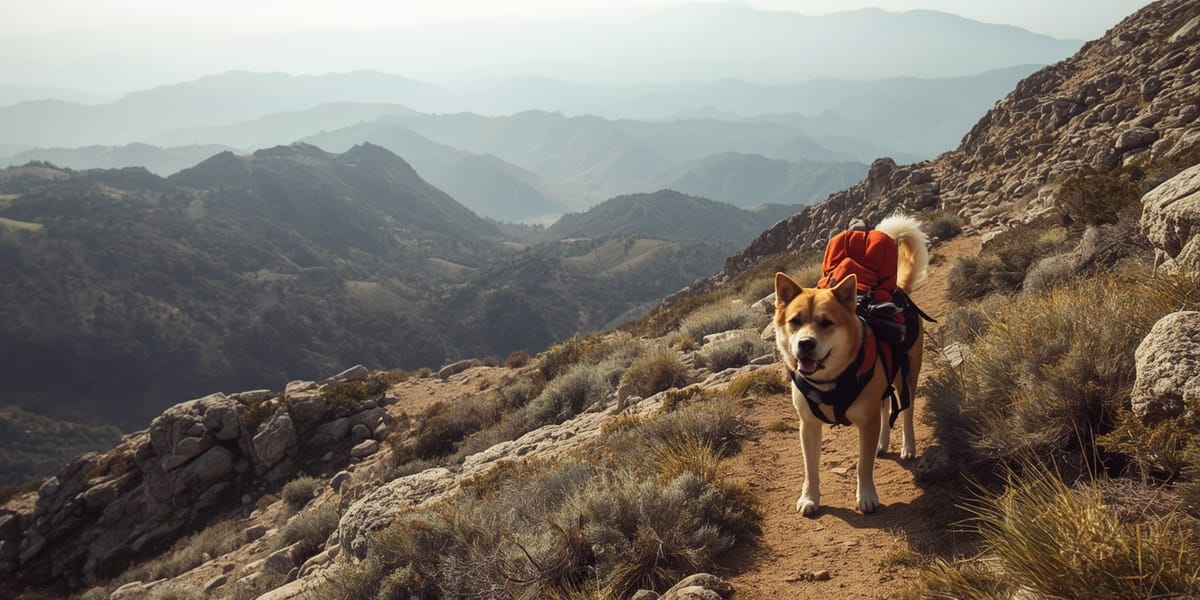
The first stretch is easy enough to encourage speed. Elevation begins to rise, shade becomes inconsistent, and the surface shifts from packed earth to exposed stone.
Watch what changes fastest: breathing, gait, paw contact, heat exposure, water use, and distance from a safe turnaround point. The Wilder standard is not simply reaching the destination. It is recognizing when conditions have changed the plan.
- Read the surface before increasing pace
- Check your dog before visible fatigue appears
- Protect water and cooling capacity for the return
- Keep a defined turnaround threshold
Terrain Challenge — Stone, Grade, Exposure
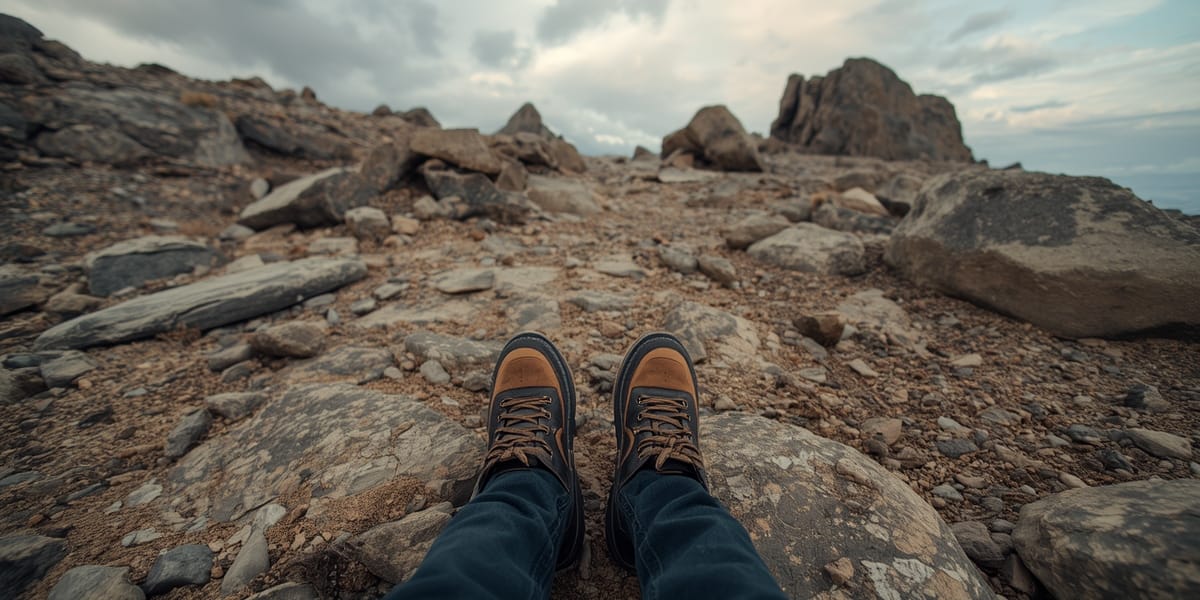
The trail narrows and the footing changes. Loose stone replaces forest floor. The grade becomes steeper, and the easiest line for a person is not always the safest line for four paws.
Field decision: reduce speed before the terrain forces you to. Watch traction, paw placement, stride length, and hesitation. If your dog begins choosing the edge of the trail or shortening stride, treat that as information—not stubbornness.
- Shorten pace on loose or angled surfaces
- Recheck paw protection after abrasive sections
- Use body position to protect against downhill momentum
- Turn back if safe footing cannot be maintained
Heat Challenge — Shade Is No Longer Constant
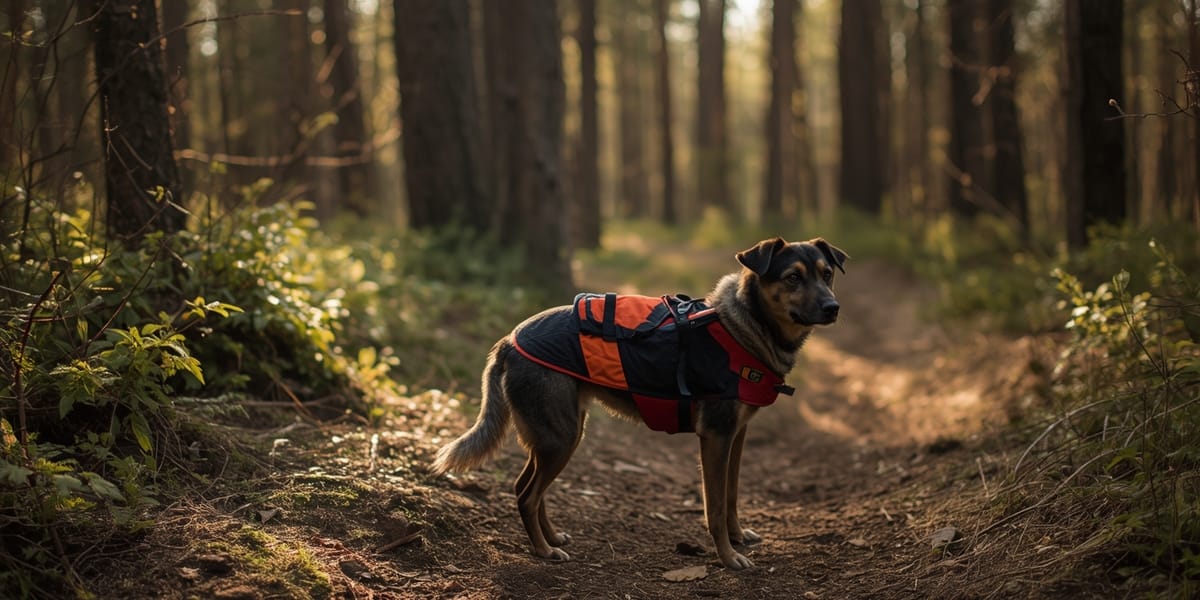
The canopy opens. Sun reaches the trail directly and the temperature on exposed stone rises faster than the surrounding air. Your remaining water now has two jobs: forward movement and the return.
Do not wait for obvious distress. Slow the expedition when recovery between effort periods becomes longer, panting remains elevated in shade, or your dog stops choosing forward movement naturally.
- Move recovery breaks into shade before overheating
- Check surface heat where paws will actually land
- Reserve water for the complete return route
- Use cooling equipment before signs become severe
Trail Fork — Choose Your Route
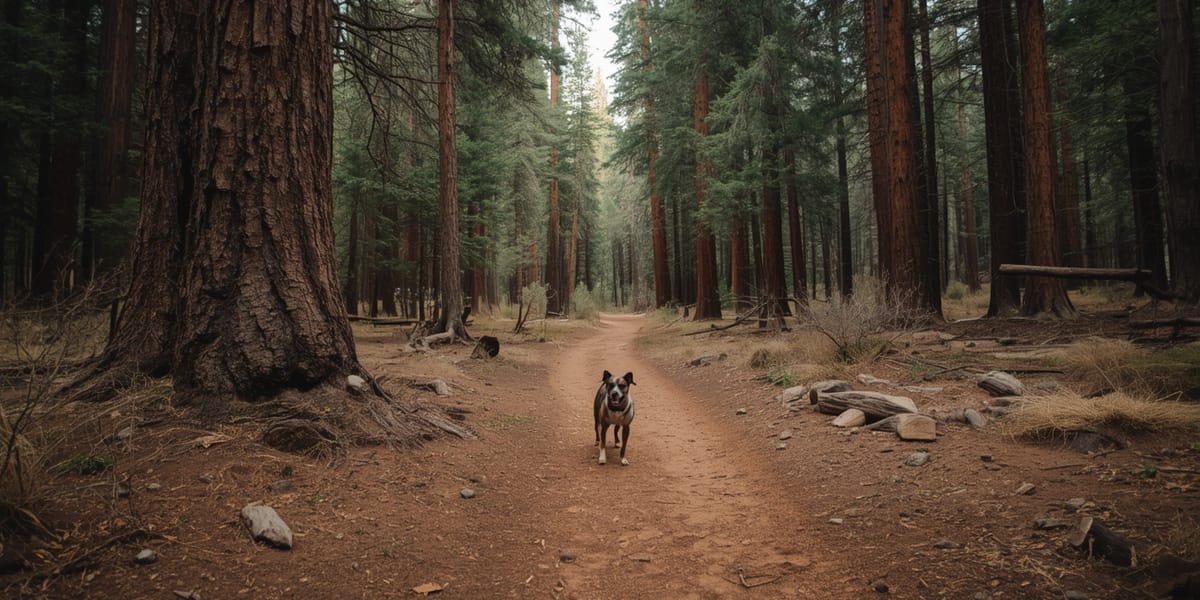
The trail separates beneath the canopy. Both paths continue the expedition, but they test different judgment. Choose one route and open only that field sequence first.
1 — ROOT LINE. You stay high beneath the sequoias. The temperature drops, but the trail tightens around exposed roots and uneven steps. Reduce pace and choose the line with the cleanest paw placement rather than the shortest distance.
2 — LOW VISIBILITY. The forest closes around the route. You can no longer see far ahead. Confirm location, turnaround distance, and your dog’s recovery before committing beyond the next bend.
3 — TECHNICAL EXIT. A steeper descent appears on the return line. Recheck boots, shorten stride, and preserve control downhill. Your success condition is not reaching the deepest point—it is exiting with the same margin of safety you entered with.
FIELD RESULT: Precision beats momentum.
1 — DESCENT TO WATER. You leave the high trail and move toward cooler air. The ground becomes damp and the final approach includes slick stone. Slow before the first wet surface and test footing instead of assuming traction.
2 — WATER DECISION. Moving water looks inviting, but source quality, current, depth, and access are unknown. Keep controlled access, use carried water first, and treat the creek as an environmental variable—not an automatic resource.
3 — RECOVERY EXIT. The cooler setting can hide accumulated fatigue. Use the stop to reassess breathing, gait, paw condition, remaining water, and the climb back out. Your success condition is leaving the creek with enough reserve for the return ascent.
FIELD RESULT: Recovery is part of route planning.
Final Reveal — The Apex Is the Standard
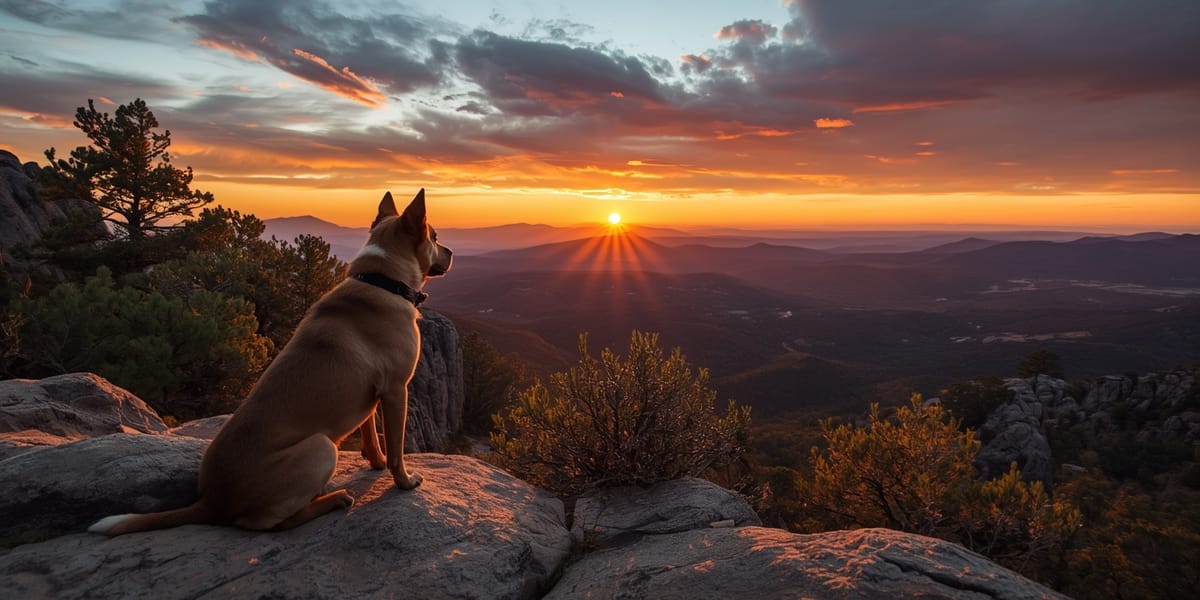
Two routes. Different terrain. The same conclusion.
The advantage is not a single piece of gear or a perfect trail. It is the system behind the decision: prepare before movement, observe before reacting, preserve a safe return, and change the plan when the environment changes.
That is the Wilder & West field standard. The expedition is designed to make the gear, protocols, and field intelligence meaningful because you have already seen the moment each one is meant to solve.
- Prepare with purpose
- Read changing conditions
- Protect the return margin
- Use equipment as part of a system
- Choose judgment over momentum
Continue into the field intelligence library.
The LAND prototype is now complete from opening through branching decision and final reveal. Continue into The Vanguard Vault for the gear and adventure intelligence that supports this side of the Wilder & West ecosystem.
Wilder & West — Explore. Learn. Equip. Belong.